Seasonal Affective Disorder: Lighting Your Home Office for British Winters
The clock says nine in the morning and the sky outside your window still looks like dusk. By three in the afternoon it has gone grey again. If most of your working week happens indoors between October and March, that shortage of daylight can leave you flat, foggy and oddly tired by mid-afternoon. For some people it goes further than a dislike of winter. Seasonal affective disorder (SAD) is a recognised pattern of low mood that arrives with the darker months and lifts in spring, and your workspace is one of the few places where you can do something practical about it.
Why winter hits a home office so hard
Our bodies take their cues from light. Bright morning light helps set the internal clock that governs sleep, alertness and mood, and in a British winter there simply isn't much of it about. Add a spare-room desk with a small window, a grey view and a cool overhead bulb, and you have a working day with almost no light signal at all.
The usual signs are familiar: difficulty getting going, poor concentration by early afternoon, irritability, comfort-eating, sleeping more but waking unrefreshed. If that sounds like your November to February, lighting changes are worth trying. They are not a substitute for medical care, though. If your mood is persistently low or you are struggling to function, speak to your GP — light therapy sits alongside proper advice, not instead of it.
Make the most of the daylight you do get
Before buying anything, fix what you already have. In a home office, positioning does more for your mood than most gadgets.
- Sit side-on to the window. Daylight should fall across your desk, not into your eyes. Facing the window creates screen glare; sitting with your back to it puts your face in shadow.
- Clear the sill. Boxes, files and a wall of houseplants can quietly block half your light. Move them somewhere else and let the glass work.
- Clean the glass. Grimy panes and dusty blinds cut light more than you would expect. A ten-minute job in October pays off until March.
- Open blinds fully every morning. It is easy to leave them half-shut out of habit, especially if the view is a brick wall.
- Bounce light around. Pale walls, a light desk surface and a mirror on the opposite wall all push daylight further into the room.
- Go outside at midday. Even ten minutes on a dull day gives you far more light than an hour under a ceiling fitting. Walk to the shop, take a call standing in the garden.
Light therapy lamps, used properly
A light therapy lamp is a bright, flat-panelled light designed to imitate outdoor light levels, usually around 10,000 lux at a set distance. It is not the same thing as a desk lamp, however bright that desk lamp claims to be.
How to get the best from one
- Follow the distance in the instructions. Brightness falls off quickly, so moving the lamp closer or further away changes what you are actually getting.
- Use it early. Most people find the first hour or two of the working day works best. Using it late in the evening can make it harder to settle at night.
- Twenty to thirty minutes is the usual starting point. Stop sooner if you get a headache or feel jittery, and build up gradually.
- Angle it towards your face, not into your eyes. Set it slightly to the side of your monitor and glance at it occasionally. You should be able to work, read or eat breakfast while it is on — you do not need to stare at it.
- Be consistent. A short session most mornings is more useful than an occasional long one in a panic on a Friday.
Keep it somewhere you already sit rather than in a cupboard, and check with your GP or pharmacist first if you have an eye condition, take medication that increases light sensitivity, or are pregnant.
Bulbs: the number that actually matters
Colour temperature is measured in kelvin, and it changes how a room feels more than any other bulb specification. Around 2700K is warm and amber; 3000K is soft; 4000K is neutral; 5000K and above looks like a bright overcast day. A single cold, blue-white ceiling light over a home desk is the least flattering combination there is — harsh on the eyes, flattening on the face, and oddly draining after a few hours.
For a home office, aim for somewhere between 3000K and 4000K on your task lighting: clear enough for paperwork, warm enough to sit under. Look for a high colour rendering index so printed pages, fabric samples and wood tones look like themselves. Choose dimmable bulbs where you can, and avoid cheap fittings that flicker, which is tiring even when you barely notice it. Warm 2700K bulbs belong in a floor lamp or a corner light, especially once the afternoon goes dark.
Layer your lighting through the day
One bright source in an otherwise gloomy room gives you glare and shadows. Several modest ones give you comfort.
- Daylight does the heavy lifting while it lasts — keep blinds open and your desk near the window.
- Task light on the paperwork, angled away from the screen to cut reflections.
- Ambient light from a floor lamp or a second desk lamp, so the wall behind your monitor isn't a black hole.
- Evening light that shifts warmer as the working day ends, which helps you wind down rather than staying wired.
Small habits that make the lighting work
Light is a cue, so timing matters as much as brightness. Try to get up at roughly the same time each day, and get some light on your face within the first hour — daylight or a therapy lamp, whichever is realistic. Take your breaks away from the screen, ideally near a window or outside. Dim the room in the last hour before bed and put the phone down, so your body can tell the difference between working light and resting light. Movement helps too: a short walk at lunchtime does more for a grey afternoon than a third coffee.
Setting up this week
Start with the free changes. Move the desk side-on to the window, clear the sill, clean the glass and swap your main bulb for something around 4000K. Add one warm lamp near your chair so the room isn't running on a single harsh source. If you still feel the winter dragging, a light therapy lamp used consistently in the morning is the next step — and if low mood is affecting your work, sleep or relationships, book an appointment with your GP. Good lighting is a sensible tool, not a cure, and a home office that feels bright and calm in January is worth the small effort it takes in October.
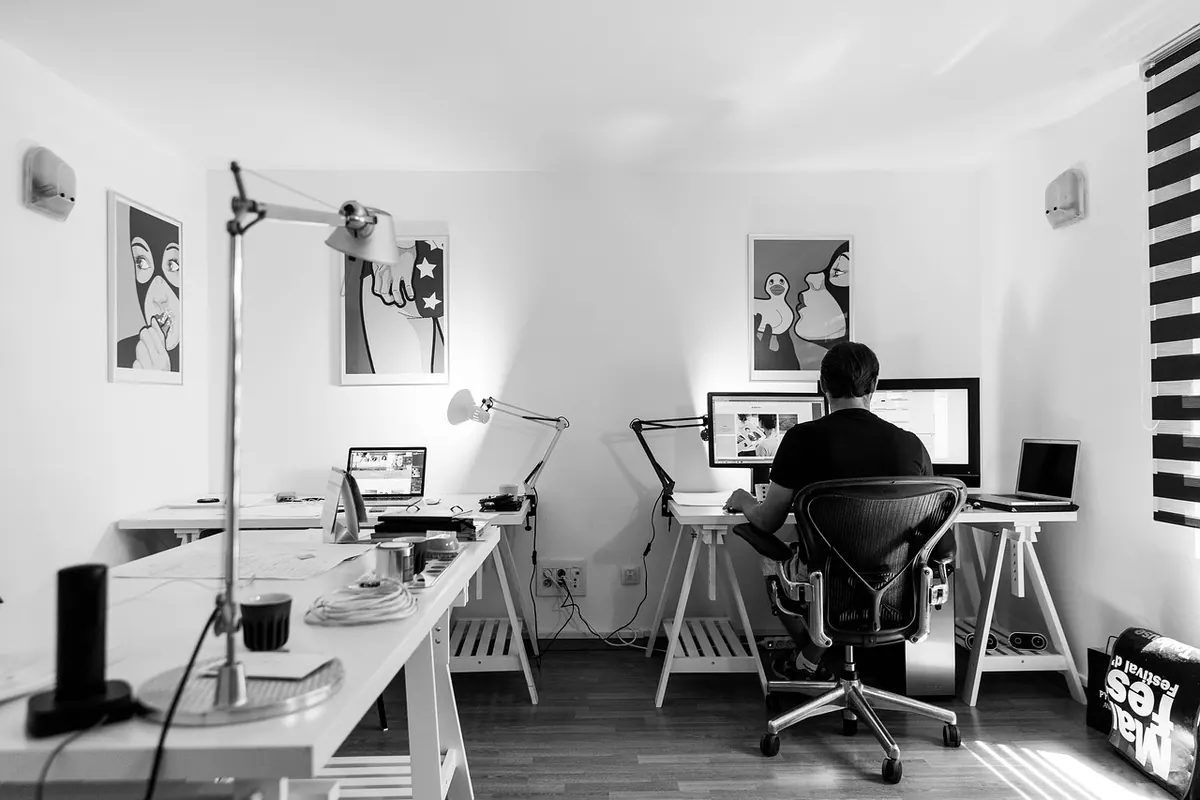
Photo: tookapic / Pixabay